Axens, IFPEN and JEPLAN have completed a recycling loop for polyester textiles.
Several tens of tons of post-consumer, polyester-rich, European textile wastes, sorted and prepared in France, have been processed in the Axens, IFPEN and JEPLAN semi-industrial demonstration unit, located in Japan, to successfully produce the base monomer of a 100% recycled polyester.
This step paves the way for circular polyester loops for the textile industry, in particular sportswear, home furnishings and the luxury sector.
● AXENS, IFPEN and JEPLAN announce the success of a major industrial test for recycling post-consumer textile waste rich in polyester (PET) using their Rewind® PET technology. This test was carried out in their semi-industrial unit (capacity 1,000 ton/year) operated by JEPLAN in Japan.
● This validation at a significant scale consisted in processing several tens of tons of textiles from the French public collection, sorted and prepared by two French partners, Nouvelles Fibres Textile and Mapea. Several tens of tons of the base monomer of polyester, BHET, have been produced and will soon be converted into polyester yarns, fabrics and garments.
● This industrial textile-to-textile recycling test of several tons of post-consumer PET is one of the first of its kind under representative industrial conditions. It paves the way for large-scale industrial chemical recycling of textile polyester, offering textile stakeholders a building block that can be integrated into a global strategy across the entire value chain committed to reduction, reuse, and textile recycling.
A breakthrough innovation that can be deployed on existing sites
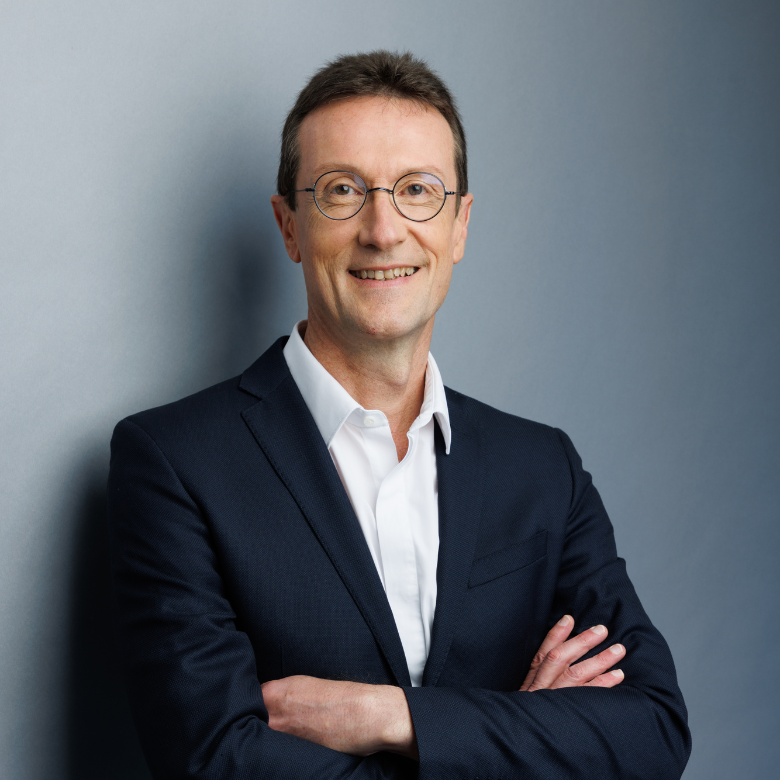
Science, scale-up engineering and operational expertise come together to demonstrate the performance of the Rewind® PET process developed by IFPEN, JEPLAN and Axens. Axens and its partners thus demonstrate the robustness, stability and reproducibility of a cutting-edge recycling technology specifically designed to promote the closed loop circularity of textile polyester.
This innovative process can be advantageously installed at industrial sites around the world that produce polyester for the textile industry, thereby enabling the substitution of fossil-based raw materials with their recycled equivalents.
Markets and deployment model
The technology, already proven and commercialized for recycling all PET packaging, including food-contact applications, is now validated for textile use under an exclusive license granted by IFPEN/JEPLAN to Axens worldwide to any industrial player wishing to develop local or regional textile-to-textile loops.
The PET recycled from this process is intended to be converted into yarn, fabric and then garments, thus completing the textile-to-textile loop for segments such as:
● sportswear and outdoor (heavy consumers of polyester);
● home furnishings (upholstery fabrics, curtains, covers);
● certain luxury applications that incorporate polyester in a controlled manner.
Enable the development of circularity
Approximately 60% of global textile production relies on polyester and other synthetic fibers, while less than 1% of fibers produced today come from genuine textiles recycled into textiles (Source : Materials Market Report of Textile Exchange).
In a world where volumes of textile wastes are rapidly increasing and where textile-to-textile recycling remains limited, this semi-industrial test provides concrete proof that a circular production of polyester can now be rapidly implemented on a significant scale, from post-consumer waste streams.
The Rewind® PET process thus fits into a global circular strategy. It offers textile manufacturers a concrete lever to reduce consumption of virgin materials and extend the products life cycle.
Moreover, the technology offers the shortest pathway (short loop) to recycle spent textiles with a positive impact on carbon footprint and cost.
With Rewind® PET, IFPEN is realizing more than ten years of research to put chemical recycling at the service of an ambitious circular economy. Our work has enabled the production of a high-purity recycled monomer that can be directly reintroduced into the most demanding applications such as textiles. This is an important step.
By hosting the Rewind® PET semi-industrial demonstrator at our Kitakyushu Hibikinada Plant, we are demonstrating in practice that this technology can be integrated into a real industrial environment, with its complex constraints and waste streams. This breakthrough opens up new possibilities for the market to develop fibers and fabrics incorporating a very high percentage of recycled material, without compromising on performance or sustainability.
About Axens
Axens Group (www.axens.net) offers a complete range of solutions for the conversion of oil and biomass into cleaner fuels, the production and purification of the main petrochemical intermediates, the chemical recycling of plastics and metals, natural gas treatment and conversion options, carbon capture and environmental solutions for air and water treatment.
Their offer includes technology processes, equipment such as furnaces and modular units, catalysts, adsorbents and related services. AXENS is ideally positioned to cover the entire value chain, from feasibility studies to start-up and monitoring of units throughout their lifecycle. This unique position guarantees optimum performance and a reduced environmental footprint. AXENS' international offering is based on highly qualified human resources, modern production facilities and an extensive global network for industrial, technical support and sales services.
AXENS is an IFP Energies Nouvelles Group company. To find out more, visit our website and follow us on LinkedIn.
Press contact
Agence Wyler x Wyler Intuitu Personae
Lisa Wyler - lisa@wyler-wyler.com - + 33 6 3 66 86 29
About IFPEN
IFPEN (www.ifpenergiesnouvelles.fr) is a public research, innovation and training organization in the fields of energy, mobility and the environment. Its teams innovate for a low-carbon, sustainable world, from scientific concepts to technological solutions deployed at industrial scale. Processes, equipment, products, software or services: its low-carbon innovations lay the foundations for the energy and ecological transition and help foster the emergence of future industrial sectors. Building on expertise developed over the past 80 years, IFPEN has been working for more than 10 years on technological solutions for advanced plastic recycling, which is set to play an important role alongside mechanical recycling in recovering complex post-consumer plastic waste.
www.ifpenergiesnouvelles.fr
About JEPLAN.INC.
JEPLAN is a Japanese circular economy innovator founded in 2007 with the mission “We circulate our world”. The company develops and deploys proprietary PET chemical recycling technologies that break down waste polyethylene terephthalate (PET) from bottles, polyester fibers, and textiles at the molecular level to produce high-quality recycled materials equivalent to virgin feedstock. JEPLAN’s integrated business model includes commercial plant operations, technology licensing, and resource circulation initiatives such as the BRING™ apparel businesses. Through its chemical recycling plants in Kawasaki and Kitakyushu, Japan, and collaborative global partnerships, JEPLAN works to realize scalable solutions for textile-to-textile and bottle-to-bottle recycling while contributing to a reduction in carbon emissions and the transition to a circular economy.
For more information: www.jeplan.co.jp/en